Climate Change in Bangladesh: Frontline Realities, Emerging Impacts, and Pathways to Resilience
Climate change is no longer a distant theoretical scenario or a future hazard for coming generations; it is an active daily emergency redefining life across the world. Nowhere is this existential threat more evident than in Bangladesh. Situated on the expansive Ganges-Brahmaputra-Meghna delta, Bangladesh stands as ground zero for global environmental degradation. Despite contributing less than 0.5% of global greenhouse gas emissions, the nation consistently ranks among the most vulnerable countries affected by severe climate disasters.
Understanding the dynamics of climate change in Bangladesh requires analyzing geographic vulnerabilities, severe economic consequences, human displacement, and the adaptive measures pioneered by its communities.
Table of Contents
1. Geographical Vulnerability: Ground Zero for Environmental Crises
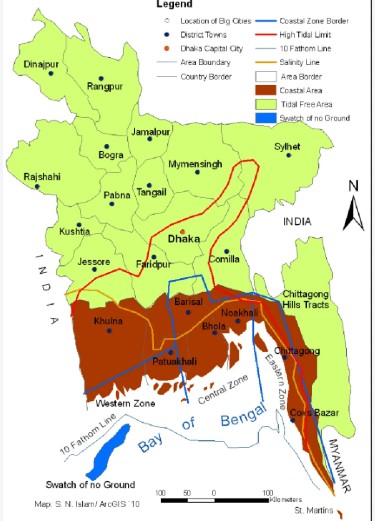
Bangladesh’s geographic position makes it naturally exposed to hydrological and climatic fluctuations. As a low-lying country dominated by coastal plains and flood-prone river networks, it experiences climate disruptions with amplified force.
- Low-Lying Topography: Over half of Bangladesh’s total land surface sits less than 5 meters above sea level. This flat landscape offers minimal structural buffer against ocean tides and river basin floods.
- Sea Level Rise: Intergovernmental Panel on Climate Change (IPCC) projections indicate that a 30-centimeter rise in sea levels could inundate up to 18% of Bangladesh’s coastal zones by mid-century, potentially stripping the country of nearly 17% of its total landmass.
- Salinity Intrusion: Rising sea levels push saltwater into agricultural soils and local freshwater estuaries. This coastal salinity damages farmland, deprives millions of safe drinking water, and disrupts aquatic ecosystems.
- Cyclones and Storm Surges: Tropical cyclones forming in the Bay of Bengal carry increasingly severe wind speeds and massive storm surges, wiping out infrastructure, homes, and coastal embankments.
2. Key Impacts of Climate Change in Bangladesh
The consequences of climate change ripple across every aspect of societal life, agriculture, public health, and urban infrastructure.
                     ┌─────────────────────────────────────────┐
                     │       GLOBAL TEMPERATURE INCREASE       │
                     └────────────────────┬────────────────────┘
                                          │
                  ┌───────────────────────┴───────────────────────┐
                  ▼                                               ▼
     ┌──────────────────────────┐                    ┌──────────────────────────┐
     │   Rising Ocean Levels    │                    │ Extreme Weather Events   │
     └────────────┬─────────────┘                    └────────────┬─────────────┘
                  │                                               │
        ┌─────────┴─────────┐                           ┌─────────┴─────────┐
        ▼                   ▼                           ▼                   ▼
┌───────────────┐   ┌───────────────┐           ┌───────────────┐   ┌───────────────┐
│ Coastal Flood │   │  Soil Salinity│           │Severe Droughts│   │ Flash Floods  │
└───────┬───────┘   └───────┬───────┘           └───────┬───────┘   └───────┬───────┘
        │                   │                           │                   │
        └─────────┬─────────┴─────────────┬─────────────┴─────────┬─────────┘
                  │                       │                       │
                  ▼                       ▼                       ▼
      ┌───────────────────────┐ ┌───────────────────┐ ┌───────────────────────┐
      │  Agricultural Loss &  │ │  Health Risks &   │ │  Forced Migration &   │
      │    Food Insecurity    │ │ Infectious Disease│ │   Urban Overcrowding  │
      └───────────────────────┘ └───────────────────┘ └───────────────────────┘
Agricultural Degradation and Food Insecurity
Agriculture remains the core economic foundation for millions of rural households in Bangladesh. Unpredictable monsoon rains, extended heatwaves, and soil salinization reduce crop yields. Rice, the primary national staple, faces production drops due to seasonal droughts in the northwest and tidal flooding in southern coastal divisions. These agricultural losses directly threaten national food security and erode rural livelihoods.
Public Health Risks
Accelerating heat exposure and erratic precipitation patterns create breeding conditions for vector-borne diseases such as dengue fever. Flooding contaminates clean water sources, triggering outbreaks of cholera and diarrheal conditions. Additionally, extreme ambient heat stress leads to substantial productivity losses for physical laborers in agriculture and construction.
Mass Displacement and Urban Migration
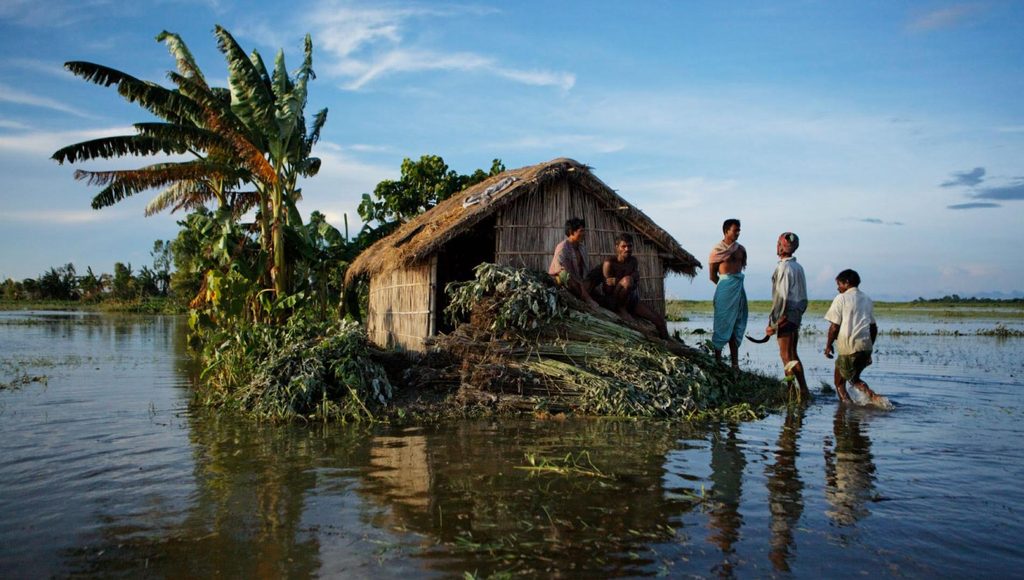
Environmental disasters drive rural populations out of vulnerable coastal zones. Deprived of land and income by riverbank erosion and coastal flooding, thousands of displaced families migrate daily toward major urban hubs like Dhaka and Chattogram. This rapid climate-induced internal migration burdens municipal services, inflates informal slum settlements, and stretches urban infrastructure to its limit.
3. Bangladesh as a Leader in Climate Adaptation
Faced with severe environmental pressures, Bangladesh has transitioned from a passive victim into a global leader in climate adaptation and disaster risk management.
Community-Based Adaptation Strategies
Locals routinely employ innovative, low-cost adaptation techniques to protect their livelihoods:
- Floating Agriculture (Dhapas): In waterlogged districts, farmers weave aquatic plants into floating organic beds to grow vegetables during flood seasons.
- Saline-Tolerant Crops: Agricultural scientists continue developing high-yield rice varieties capable of surviving extended submersion and elevated soil salinity.
- Elevated Housing and Infrastructure: Homes, livestock shelters, and community centers are built on raised earthen platforms to withstand seasonal river rises.
Structural and National Projects
At the policy level, national initiatives target long-term environmental protection:
- Early Warning Systems: Integrated cyclone notification networks and coastal warning towers have drastically decreased human casualties during major storms over recent decades.
- National Adaptation Plan (NAP): Designed to guide long-term climate action, channel adaptation finance, and build infrastructure against coastal erosion.
- Nature-Based Solutions: Coastal afforestation projects and mangrove conservation efforts along the Sundarbans serve as live natural wave breakers against storm surges.https://iccheghuri.uniqueitmart.com/wp-admin
4. The Economic Impact and Adaptation Needs
| Impact Category | Key Drivers | Economic & Social Consequences |
| Agricultural Loss | Salinity intrusion, droughts, unseasonal rainfall | Loss of arable land, reduced rice yields, severe rural income loss. |
| Infrastructure Damage | Cyclones, storm surges, riverbank erosion | Repeated damage to roads, coastal embankments, schools, and hospitals. |
| Labor Productivity | Extreme heat stress, rising ambient temperatures | Billions in lost potential work hours, particularly in outdoor farming. |
| Internal Migration | Inundation of coastal habitats | Rapid growth of informal urban slums, straining city resources. |
5. The Path Forward: Climate Justice and Global Responsibility
While local adaptation measures provide vital protection, long-term resilience requires sustained international action.
Demanding Climate Finance and Loss & Damage
Bangladesh has consistently advocated for international climate justice on global platforms. Developing nations facing disproportionate climate risks require predictable grant-based financing rather than interest-bearing debt. Operationalizing international Loss and Damage funds is essential to compensate communities experiencing irreparable land loss and forced displacement.
Private Sector Involvement and Technology Transfer
Strengthening resilience relies on scaling up clean energy access, improving early warning systems, and building water management systems. Mobilizing private sector capital alongside government investment provides the financing required for large-scale engineering, infrastructure, and agricultural innovation.
Conclusion
The story of sea level rise bangladesh highlights both extreme environmental risk and notable human resilience. While rising seas, salinization, and unpredictable weather patterns challenge the nation’s economic progress, local communities continue to pioneer adaptive strategies. However, local action alone cannot substitute for global accountability. Securing a sustainable future for Bangladesh requires aggressive global emissions reductions alongside direct, equitable climate finance.Understanding the dynamics of climate change in Bangladesh requires analyzing its unique geographic vulnerabilities, severe economic consequences, human displacement, and the pioneering adaptive measures developed by its resilient communities. Addressing climate change in Bangladesh requires both sustainable community strategies and direct international financial support to ensure long-term stability.
Conclusion
The story of climate change in Bangladesh highlights both extreme environmental risk and remarkable human resilience. While rising seas, salinization, and unpredictable weather patterns challenge the nation’s economic progress, local communities continue to pioneer adaptive strategies. However, local action alone cannot substitute for global accountability. Mitigating the consequences of climate change in Bangladesh requires aggressive global emissions reductions alongside direct, equitable climate finance.
Demanding Climate Finance and Loss & Damage
Bangladesh has consistently advocated for international climate justice on global platforms. Climate change in Bangladesh Developing nations facing disproportionate climate risks require predictable grant-based financing rather than interest-bearing debt. Operationalizing international Loss and Damage funds is essential to compensate communities experiencing irreparable land loss and forced displacement.
Private Sector Involvement and Technology Transfer
Strengthening resilience relies on scaling up clean energy access, Climate change in Bangladesh improving early warning systems, and building water management systems. Mobilizing private sector capital alongside government investment provides the financing required for large-scale engineering, infrastructure, and agricultural innovation.
Leave a Reply